On this page
A trial by written declaration is a way to contest a California traffic infraction in writing instead of in court, under VC 40902. You send the court's request form with your statement and the bail. If you lose, you can ask for a new trial in person.
What is a trial by written declaration?
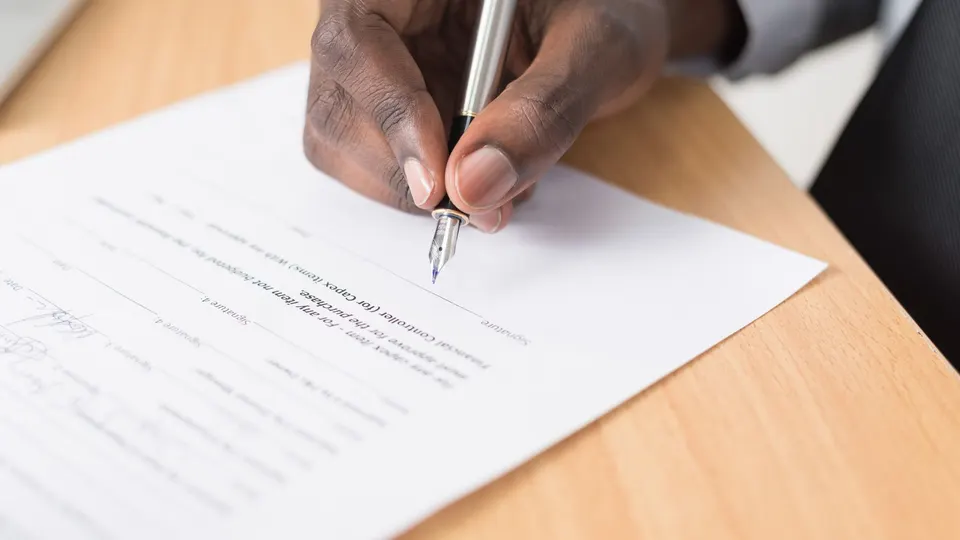
A trial by written declaration is a trial on paper. Instead of appearing in court, you send your side in writing, and the court decides on the papers. Vehicle Code 40902 creates the option.
Two terms matter here. An infraction is the category of minor offense that covers most Vehicle Code tickets. Bail is the amount the court's schedule sets for the offense, which you post with your request.
How is it different from a court trial?
In a court trial you appear before a judge on a set date. In a trial by written declaration you do not appear. You post bail with your request, send your statement and any exhibits, and the court mails its decision on form TR-215. If you lose, form TR-220 asks for a new trial, and that new trial is held in person. The Santa Clara court's traffic pages do not mention this option, so confirm that your own court accepts it and how.
The trade-off is control. On paper, the court sees only what you send, so what you include matters. A missed date can also lead the court to treat a failure to appear as consent to a decision in your absence, as the Santa Clara court notes.
Who can use it?
Under VC 40902(a)(1), a defendant may elect a trial by written declaration for any infraction under the Vehicle Code or a local ordinance adopted under it. The statute states one exception, so read it in the statute before you rely on this option, and check that your citation is for an infraction.
Check your notice before you start, because some sources say a request made after the due date is ineligible.
What are the steps?
- Check eligibility on your notice. Look for the due date and for how your court accepts requests.
- Get the court's Request for Trial by Written Declaration form. Ask the court or check its traffic page.
- Write your statement. Set out the facts as you know them. See the checklist at the end of this page.
- Post bail. The declaration goes in with bail under the uniform schedule (VC 40902(b)). The ticket cost calculator shows typical amounts.
- Send everything before the due date. One court says the request and bail must reach it before "the due date on your notice." The number of days varies by notice.
- Wait for the decision. The court mails its Decision and Notice on form TR-215.
What forms are involved?
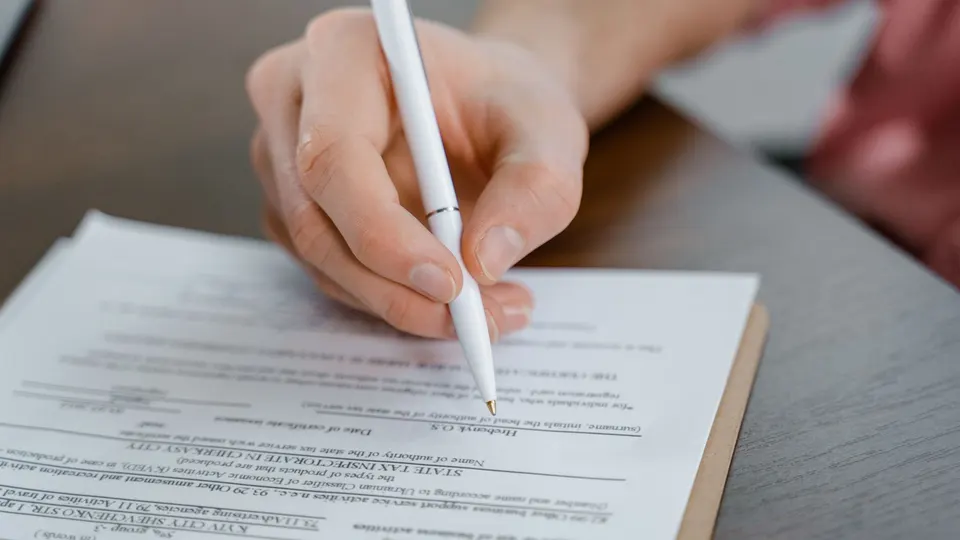
| Form | What it is | Who files it |
|---|---|---|
| Request for Trial by Written Declaration | The court's request form, signed, with your written statement of facts | You |
| MC-031 | A declaration attached to the request, used for witnesses | You or a witness |
| TR-215 | Decision and Notice, mailed after the trial | The court |
| TR-220 | Request for new trial (trial de novo) after losing | You |
Form details come from the San Mateo court page and the Su Corte self-help page. Your own court may list different procedures, so confirm there.
What if you lose?
You can ask for a new trial, called a trial de novo, on form TR-220. You must file within 20 calendar days of the court mailing the TR-215 Decision and Notice.
The window runs from the date the court mailed the decision, so act as soon as it arrives. VC 40902(b) says the bail is promptly refunded if you are found not guilty or the charge is dismissed. Ask your court how it handles a refund in your case.
When do you get the bail back?
San Mateo Superior Court says that after a guilty finding, a refund of any remaining balance is mailed and may take 8–12 weeks. The same court gives that time for not-guilty and dismissed cases. That figure comes from one county's page, not from the statute, so ask your own court how long its refunds take.
What should the statement include?
Your declaration tells the court what happened from your side. A neutral checklist:
- The date, time and place of the stop or the alleged violation.
- The facts of what you did and what you observed: road, weather, signs, traffic.
- Diagrams or photos you took, labeled with where and when.
- Any witness statement, attached with form MC-031.
- Your name, citation number and signature.
Keep it to facts. The page on CVC 22350 gives an example of how a statute's own factors frame the question. For the choice between this route, court and traffic school, read traffic school or fighting the ticket, and find your court through the traffic courts index.
Frequently asked questions
Do I have to pay the fine first?
You post bail with your request. VC 40902(b) says you submit bail in the amount set by the uniform traffic penalty schedule when you submit the declaration, and that the bail is promptly refunded if you are found not guilty or the charge is dismissed. Ask your court how it handles the deposit.
Can I still get traffic school?
This guide could not confirm that rule. The Santa Clara court's traffic FAQ and division pages do not mention trial by written declaration at all. Ask the court whether traffic school remains open if you file a written declaration, and ask before you file.
What happens if the officer does not respond?
This guide could not confirm what the officer's deadline is or what follows if none is met, so it states no rule. The court decides on the papers it receives. Ask the court how it handles that situation before you file, and keep your own copy of everything you send.
How long does a written declaration take?
No single timeline applies. The court mails its decision on form TR-215 after it reviews the papers. Ask the clerk how long decisions are taking. The deadline this guide can confirm runs after the decision: 20 calendar days to request a new trial on form TR-220. Ask the court what happens next.
Can a lawyer prepare it?
Yes, a lawyer can help you write the statement and assemble the forms and exhibits. The declaration still has to be signed under the court's rules, and the court decides on what it receives. A lawyer cannot promise a result. Ask what the fee covers and when the firm needs your documents.
Last reviewed · Reviewed by the California Ticket Guide editorial team